I design AI-assisted business workflows that give your team time back. Here are three real systems I created for my clients to remove repetitive work.
What I built and tested
These workflows help teams save time, work more efficiently and focus on higher-value tasks.
AI handles the repetitive steps, while people stay in control of the decisions.
Personalised cold emails ready to review, without hours of lead research.
How it works 02An assistant that reads your inbox, creates the task and routes it to the right person.
How it works 03Company research and lead qualification in minutes, merged into one structured report.
How it works01Cold email outreach and lead generation
The workflow researches and scores each lead, drafts the email and logs it. Nothing sends until a person approves it.
Businesses spend time and money finding potential customers, but what happens to those leads afterwards?
Too often, they end up sitting in spreadsheets or CRM systems because researching each company, deciding who to prioritise and preparing personalised outreach takes too much time.
The result? Potential business opportunities get overlooked, and promising leads never receive the attention they deserve.
A growing list of potential customers, but no efficient way to research and prioritise them.
Every new lead requires manual research, checking company information and writing emails from scratch. Opportunities can be missed simply because the team doesn’t have enough time to do outreach at scale and follow up.
An AI workflow researches each lead, evaluates how well they fit your ideal customer profile and prepares personalised emails based on relevant company information.
The research, lead scores and outreach drafts are organised automatically, giving your team everything it needs to review prospects and take the next step.
A CEO booked meetings with potential clients using this AI-powered outreach system.
The value goes beyond saving hours on manual research. It’s about making better use of the leads you already have, identifying relevant opportunities and turning that information into sales conversations.
You may only have a company name or a basic contact.
It checks fit, context and relevant signals. Your team does not start from an empty page.
The message uses the company’s context. It is not a generic template.
The system never sends on its own. A person checks the research, tone and relevance first.
The database or CRM stays up to date without more manual copying.
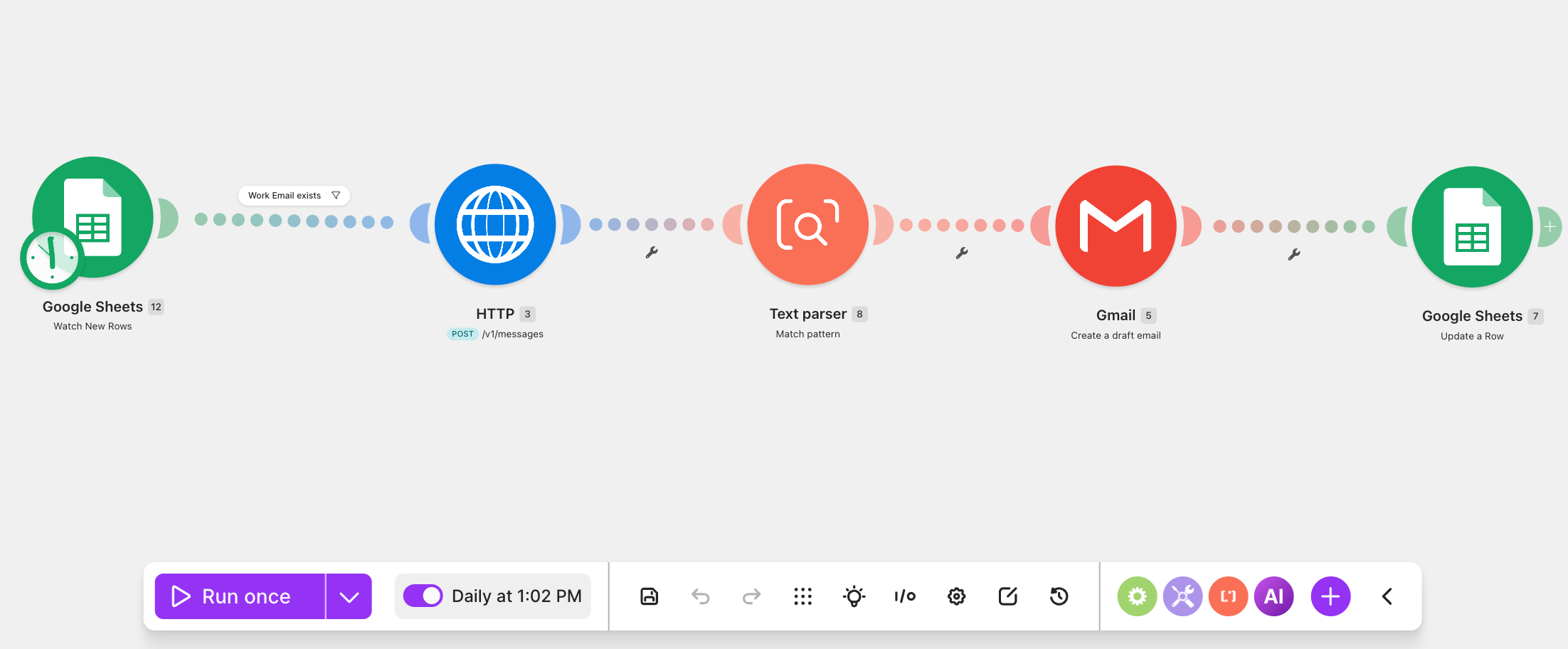
A real outreach workflow built in Make
02Marketing operations and internal systems
Requests stop getting buried. The assistant spots the real ones, creates the task and sends it to the right person.
Someone had to read every email, spot the requests, copy the details into the project management tool, write the task and assign it. If that did not happen or someone missed an email, the request stayed buried in the inbox.
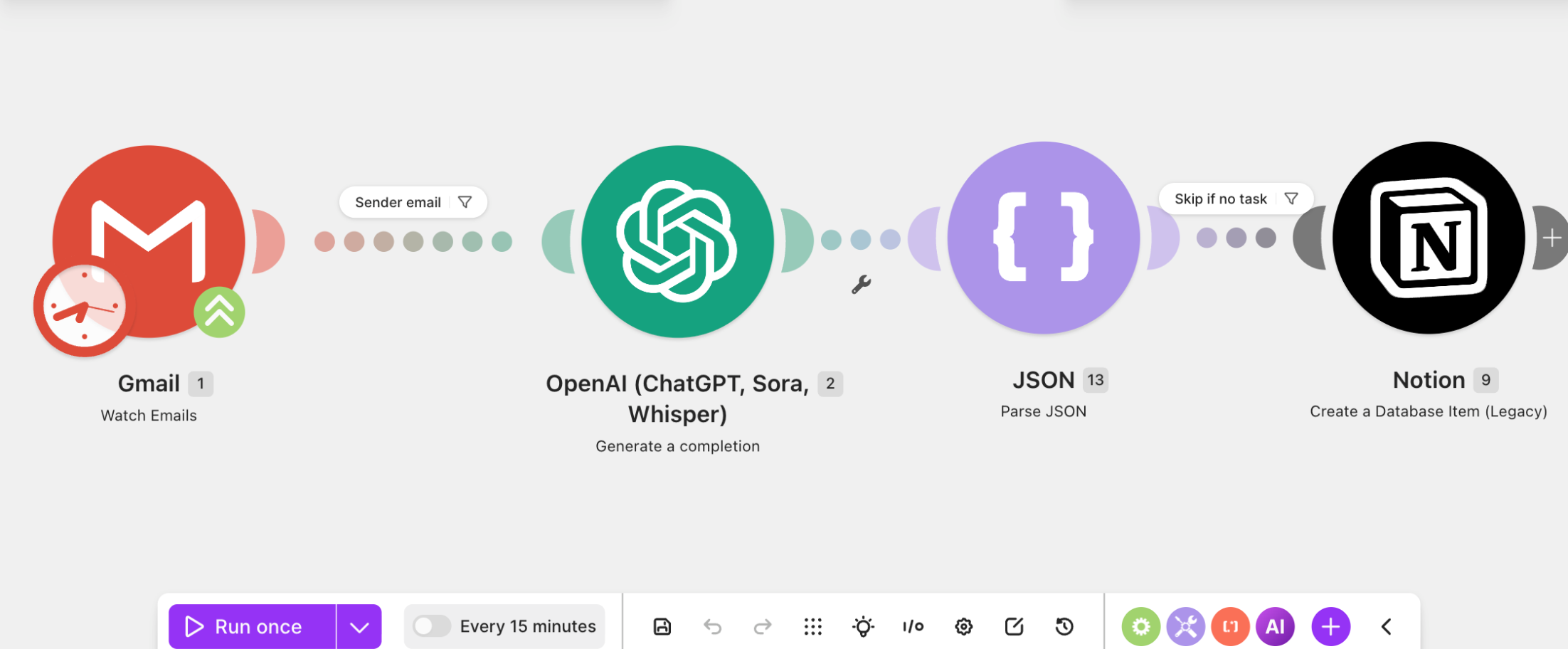
The AI automation reads incoming emails and spots the real requests. It creates the task in Asana, Notion or ClickUp with the key details and assigns it to the right person or team.
Fewer requests sit unnoticed in inboxes. Managers see more clearly what work is coming in. An AI assistant supports their daily business operations.
The request starts where work often starts: inside an inbox.
It reads the relevant conversations, so nobody has to sort through the inbox first.
It skips messages without an actionable request, so the task board stays tidy.
The request becomes a clear task in your project management platform. It goes to the right person or team.
A real inbox-to-task workflow built in Make
Recognise this in your own team? Let’s look at where the hours go.
Book a call03Automated market research and company profiles
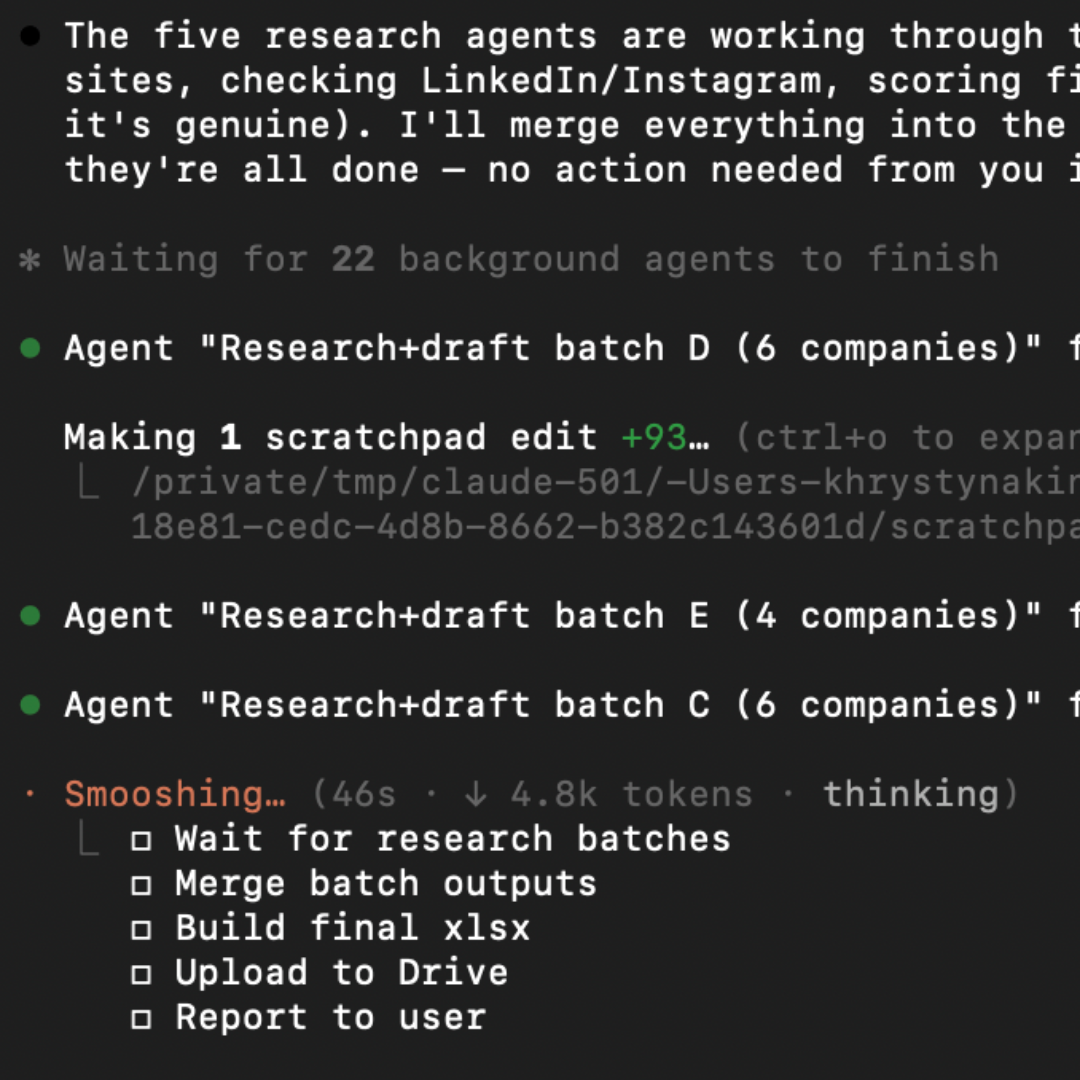
Parallel research agents work through a target list against shared criteria and merge the findings into one report automatically uploaded to Google Drive or your CRM.
Documented run
The workflow researched 50 companies in approximately 10 minutes. That work previously took days.
Control pointThe workflow uploads the report for human review before anything moves into an outbound process.
Researching dozens of companies by hand took days. The comparisons came out inconsistent.
An AI workflow sent multiple research agents through batches of companies against shared criteria. It then merged the findings into one structured report.
Leadership gets a faster first view of a market or prospect set. The team spends its time validating findings, not collecting first-pass signals.
Each batch gets the same criteria and output requirements.
They review company websites, LinkedIn, Instagram, public activity and fit signals.
It brings the separate findings together in one structured report.
A human checks the research before it moves into any outbound process.
An actual research run using Claude Code
Want results like these for your team? Tell me what you do by hand today.
Discuss your workflowWhat changed for the business
Senior people no longer have to be the glue between every inbox, spreadsheet and research tab. The workflow does the first pass. A person steps in to approve.
More time for selling, advising, creating and looking after relationships.
Less waiting between something coming in and a clear next step.
Every lead, email and company gets checked the same way.
You can see what the workflow did and where the information came from. You also see where a person steps in.

How I start
Where does your team lose time every week copying, checking or chasing information by hand? That is where I start. Then I design and build a workflow around that specific problem.
Not sure where to start? Tell me what your team keeps repeating and we will map it together.
Book a workflow reviewIs this relevant to your business?
The first pass. The workflow researches and scores companies against your criteria. Your team starts from a structured report, not a blank page. In one documented run, it researched 50 companies in about 10 minutes instead of days. A person still reviews the findings.
Usually, yes. I build around the tools your team already uses. That can be Google Workspace or Microsoft 365, Gmail or Outlook, Slack or Teams, HubSpot or another CRM, and project boards such as Asana, Notion, ClickUp or Monday. The workflow connects them through Make, n8n or Zapier, so information moves between them without anyone copying it across. Nothing gets replaced, and your team keeps working where it already works.
The inbox assistant reads incoming email and spots the real requests. It creates the task and routes it to the right person or team. It leaves emails with no action alone, so the task board stays clean.
I map the process first. Where does the information come from? Who needs it next? What keeps repeating? Where do errors or delays appear? Then I automate only the part that repeats. A person keeps the judgement calls.
A person stays in the loop wherever judgement matters. The workflow drafts outreach for you to review and never sends on its own. It logs every step, so you see what it did and where the information came from.
Automation starts from €499. Custom pricing depends on the complexity of the workflow.
The goal is not to automate everything. It is to remove unnecessary repetition so your team can focus on better work.